

What Is an Isolation Transformer?
October 28, 2026
An isolation transformer is an electrical device that transfers power from one circuit to another through electromagnetic induction without a direct electrical connection between the primary and secondary windings. It helps separate electrical systems, reduce certain types of electrical noise, and support safer operation in many industrial and electronic applications.
Isolation transformers are widely used in manufacturing facilities, laboratories, audio systems, marine electrical installations, and test equipment. However, choosing the right model requires more than matching the input voltage. You also need to consider load capacity, frequency, insulation, grounding, and the operating environment.
In this guide, KEZHIDING explains how isolation transformers work, where they are used, and what to consider when selecting one for your application.
How Does an Isolation Transformer Work?
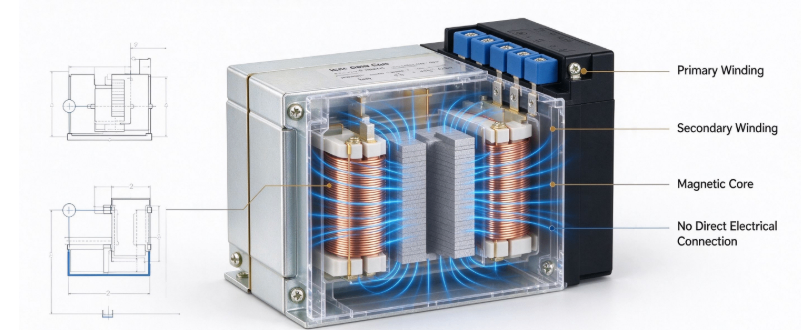
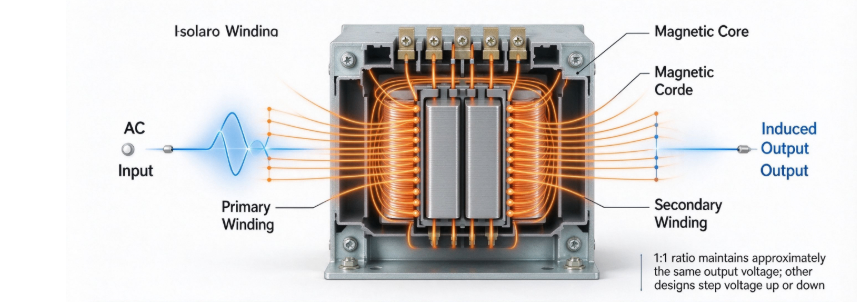
An isolation transformer usually contains a primary winding, a secondary winding, and a magnetic core. When alternating current flows through the primary winding, it creates a changing magnetic field in the core. This field induces voltage in the secondary winding, transferring electrical energy without a direct conductive connection between the two circuits.
Many isolation transformers use a 1:1 turns ratio, meaning the output voltage is approximately equal to the input voltage. Other designs can step voltage up or down while maintaining electrical isolation.
One important benefit is galvanic isolation. It can interrupt a direct conductive path between the input and output circuits, helping reduce some electrical interference and grounding-related problems. However, an isolation transformer does not automatically eliminate every electrical hazard or guarantee a noise-free output. Proper grounding, protective devices, installation, and maintenance remain essential.
What Are the Main Benefits of an Isolation Transformer?
Isolation transformers offer several practical benefits when correctly selected and installed.
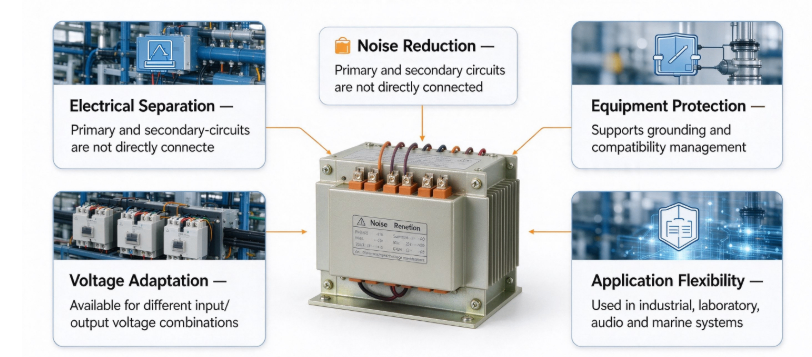
Electrical separation: The primary and secondary circuits do not have a direct conductive connection, which can help isolate equipment from certain upstream electrical conditions.
Noise reduction: Appropriate transformer designs can reduce some common-mode noise and help limit interference in sensitive systems.
Equipment protection: Isolation can help manage specific grounding and electrical compatibility issues that may affect connected equipment.
Voltage adaptation: Some models provide different input and output voltage combinations to suit regional power systems and equipment requirements.
Application flexibility: Isolation transformers are available for industrial machinery, electronic instruments, audio systems, marine equipment, and other specialized loads.
The actual performance depends on transformer design, load characteristics, installation conditions, and the electrical protection system.
How to Choose an Isolation Transformer 120V
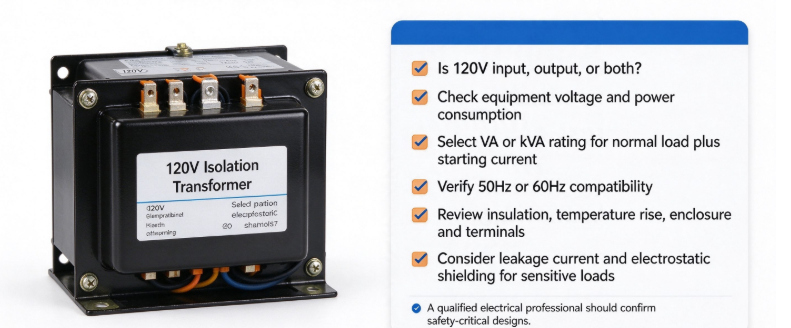
An isolation transformer 120V model is commonly considered for equipment designed to operate on 120-volt AC power. Before purchasing one, confirm whether 120V is the required input voltage, output voltage, or both.
Start by checking the connected equipment's rated voltage and power consumption. Transformer capacity is often specified in volt-amperes (VA) or kilovolt-amperes (kVA). The selected rating should accommodate the normal load and any relevant starting or inrush current, especially for motors and other inductive equipment.
Next, verify the operating frequency, such as 50Hz or 60Hz, and confirm that the transformer is suitable for the intended supply. Review insulation ratings, temperature rise, enclosure protection, terminal configuration, and applicable safety requirements.
For sensitive instruments or specialized machinery, it is also important to consider leakage current, electrostatic shielding, and grounding arrangements where relevant. A qualified electrical professional should confirm the design for applications with specific safety requirements.
KEZHIDING can help buyers evaluate transformer specifications and identify a suitable configuration based on the equipment and installation environment.
Isolation Transformer 240V: What Should You Know?
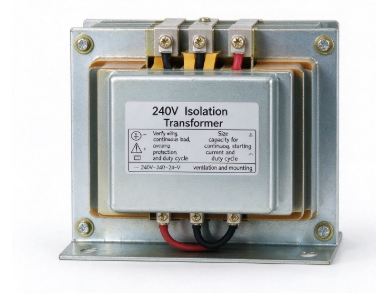
An isolation transformer 240V model may be suitable for equipment operating on a 240-volt AC supply or requiring a 240V isolated output. The correct configuration depends on the regional power system and the equipment's nameplate requirements.
Before selecting a transformer, determine the required primary and secondary voltages. A 240V-to-240V model may provide isolation without intentionally changing the nominal voltage, while other configurations can convert between different voltage levels.
Capacity is another key factor. Add up the connected loads and account for starting currents, duty cycle, and any planned future expansion. For continuous operation, the transformer must be rated for the actual operating conditions rather than just the equipment's brief peak demand.
Installation also matters. Confirm the wiring arrangement, grounding method, overcurrent protection, ventilation, and mounting requirements. Never assume that an isolated secondary circuit is automatically safe to touch. The correct protection and bonding arrangements depend on the system design and applicable electrical codes.
What Is an Isolation Transformer for Audio Equipment?
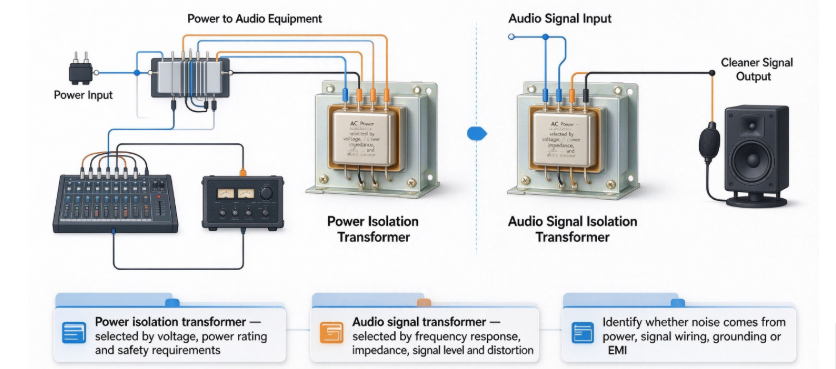
An isolation transformer for audio systems helps address electrical coupling and certain ground-loop problems that can introduce hum or unwanted noise. It may be used in professional sound systems, recording studios, broadcast equipment, and audio signal connections.
It is important to distinguish between an audio signal isolation transformer and a power isolation transformer. A signal transformer operates within an audio signal path and must meet requirements for frequency response, impedance, signal level, and distortion. A power isolation transformer supplies electrical power to equipment and is selected according to voltage, power rating, and safety requirements.
For audio applications, first identify whether the problem comes from the power supply, signal wiring, grounding, or electromagnetic interference. A transformer can help with some issues, but it is not a universal solution for every type of noise.
Selecting the correct transformer type and rating helps maintain signal quality or provide appropriate power isolation without introducing unnecessary losses or compatibility problems.
Why Use an Isolation Transformer for a Boat?
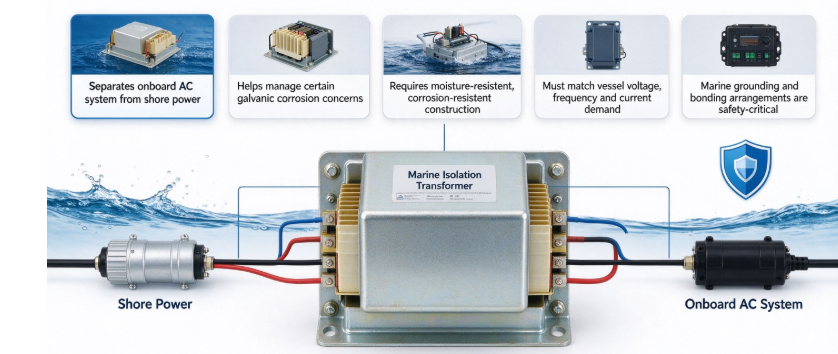
An isolation transformer for boat installations may be used to separate a vessel's onboard AC electrical system from shore power through magnetic coupling. In suitable marine installations, this arrangement can help address certain galvanic corrosion concerns associated with shore-power connections.
Marine environments require careful attention to moisture, salt exposure, vibration, ventilation, and corrosion resistance. The transformer must also be compatible with the vessel's shore-power voltage, frequency, current demand, and electrical distribution system.
Correct installation is particularly important because marine grounding and bonding arrangements are safety-critical. A qualified marine electrician should select and install the transformer according to the vessel's design and applicable marine electrical standards.
Buyers should confirm the required power rating, enclosure and environmental protection, mounting conditions, and compatibility with the onboard electrical system before choosing a model.
What Is an Isolation Transformer for Oscilloscope Use?
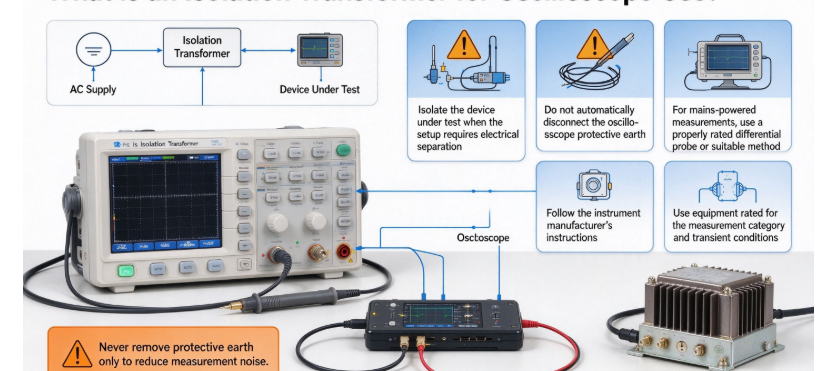
An isolation transformer for oscilloscope applications may be considered when troubleshooting equipment that requires electrical separation. However, it is essential to understand what should—and should not—be isolated.
A transformer may be used to isolate a device under test from the supply in a properly designed test setup. This does not mean that the oscilloscope itself should automatically be disconnected from protective earth or powered through an isolation transformer. Doing so can create additional hazards and may defeat built-in safety protections.
For measurements involving mains-powered circuits, a properly rated differential probe or another suitable measurement method is often the safer choice. Never remove an oscilloscope's protective earth connection to eliminate measurement noise.
Always follow the instrument manufacturer's instructions and use equipment rated for the voltage category and transient conditions involved. If you are unsure how to configure the test setup, consult a qualified electrical engineer or test-equipment specialist.
How to Select the Right Isolation Transformer
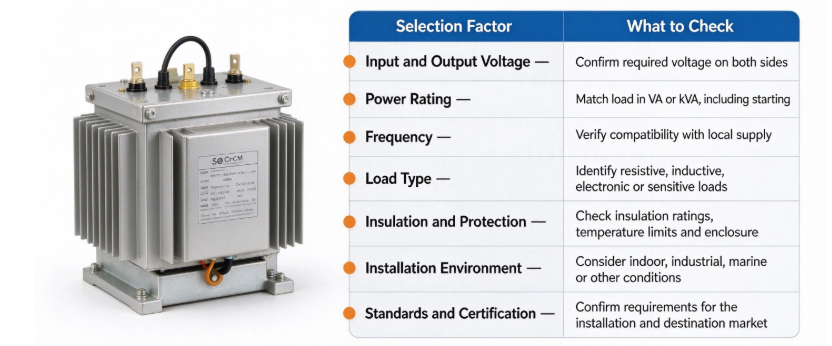
Before placing an order, review these key specifications:
| Selection factor | What to check |
|---|---|
| Input and output voltage | Confirm the required voltage on both sides |
| Power rating | Match the load in VA or kVA, including starting demand |
| Frequency | Verify compatibility with the local supply and equipment |
| Load type | Identify resistive, inductive, electronic, or sensitive loads |
| Insulation and protection | Check insulation ratings, temperature limits, and enclosure requirements |
| Installation environment | Consider indoor, industrial, marine, or other operating conditions |
| Standards and certification | Confirm the requirements that apply to the installation and destination market |
The right transformer should match the electrical load, operating environment, and applicable safety requirements. Avoid selecting a model based on voltage alone.
Find the Right Isolation Transformer with KEZHIDING
Choosing an isolation transformer supplier involves more than matching a voltage rating. Capacity, frequency, load behavior, insulation, grounding, and installation conditions all influence the final selection.
KEZHIDING supports transformer buyers in evaluating technical requirements and identifying suitable solutions for industrial and specialized applications. Whether you need a transformer for 120V or 240V equipment, audio-related power systems, marine installations, or electrical testing, clearly defined specifications help ensure a better match.
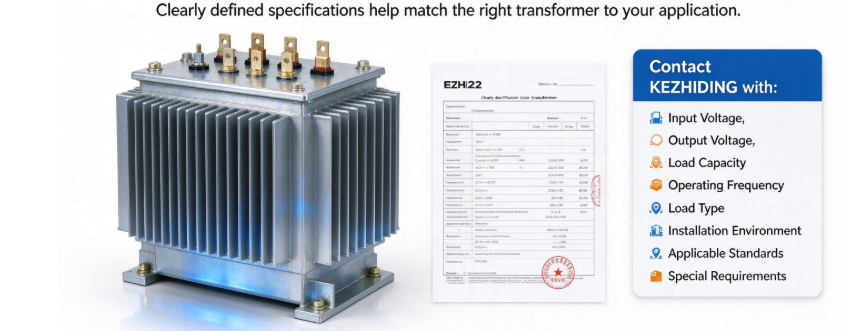
Contact KEZHIDING with your input voltage, required output voltage, load capacity, operating frequency, and application details to discuss a suitable transformer configuration.
Frequently Asked Questions
Does an isolation transformer change the voltage?
Not necessarily. Many isolation transformers use a 1:1 turns ratio to provide isolation while maintaining approximately the same nominal voltage. Other models can step voltage up or down.
Does an isolation transformer make electrical equipment completely safe?
No. It provides electrical separation but does not remove every shock, fire, or overcurrent hazard. Proper installation, grounding, protection, and safe working practices remain essential.
How do I size an isolation transformer?
Check the load's voltage and VA or kVA requirements, then account for starting current, duty cycle, and operating conditions. A qualified professional should verify the selection for demanding or safety-critical applications.
Can I use a power isolation transformer for audio signals?
A power isolation transformer is not a substitute for an audio signal isolation transformer. The two serve different purposes and have different electrical characteristics.
What information should I provide when requesting a quote?
Provide the input and output voltages, power rating, frequency, load type, installation environment, applicable standards, and any special requirements. This information helps KEZHIDING assess the appropriate configuration.


Hit enter to search or ESC to close


